The Great Transformation: How AI is Redefining Every Role in PR, Media & Marketing Agencies (Part 1)
Part 1 of 2: From Execution to Orchestration
Part 1 of 2-part series on AI transformation of agency roles. Covers the fundamental shift from billable hours to intelligence hours, internal operations efficiency, and deep dives into 8 roles being transformed.
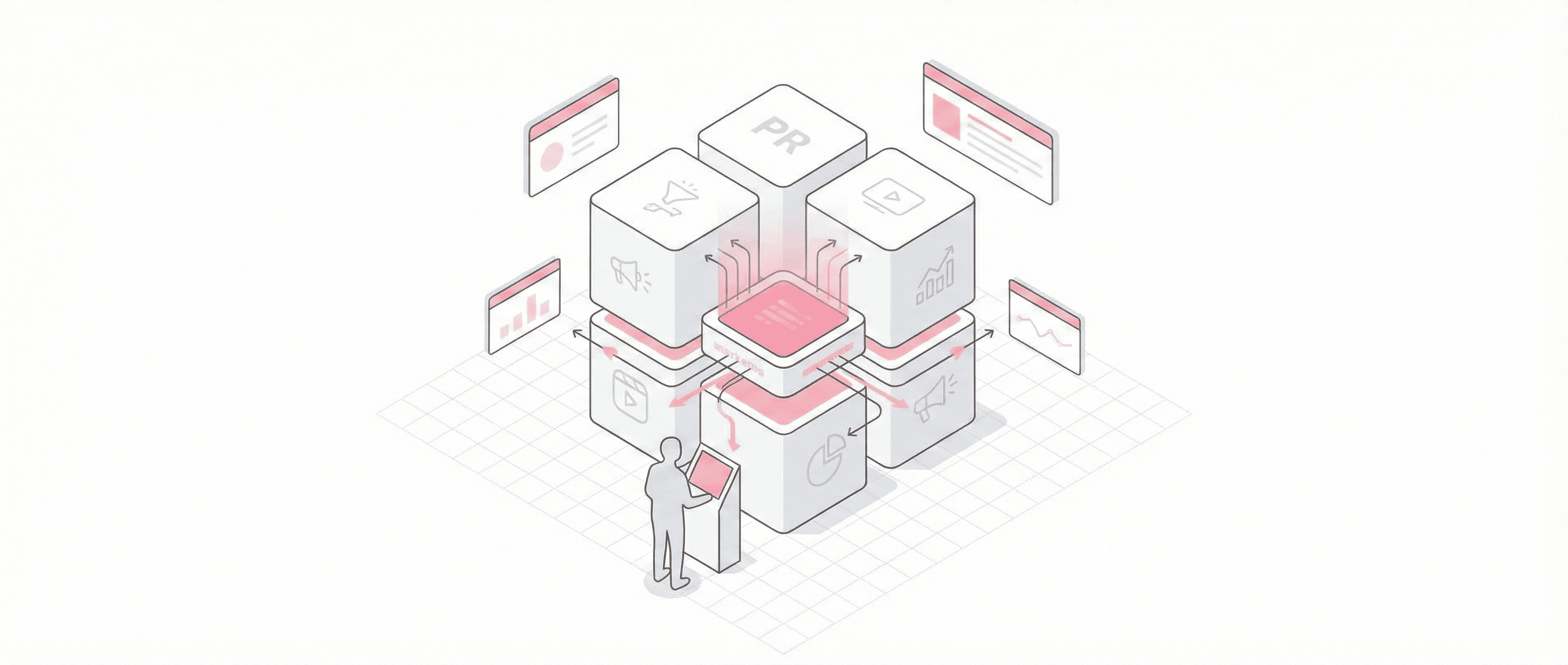
57% of agencies have already slowed entry-level hiring. But here's what the headlines miss: 75% are actively creating new AI-focused roles. This isn't a story of replacement—it's a story of reinvention.
The numbers tell a stark story. WPP now creates Instagram ads in four minutes that once took two weeks. Publicis reports that 73% of its operating model is now AI-powered. And the global AI marketing industry, valued at $47.32 billion in 2025, is projected to exceed $107 billion by 2028.
Yet beneath these statistics lies a more nuanced truth. As WPP's former CEO Mark Read acknowledged: "There is no doubt that to do the work we do today, there will be fewer people involved." But in the same breath, agency after agency insists that AI is an enabler, not a replacement.
So which is it?
The answer is both—and understanding this paradox is essential for anyone working in, or with, agencies today.
The Fundamental Shift: From Billable Hours to Intelligence Hours
For decades, agency economics ran on a simple equation: value equals people times hours. An agency's worth was measured by how many hands it could put on an account, multiplied by hourly rates. The more people billing time, the more revenue.
AI has demolished this model.
When work that took two weeks now takes four minutes, clients won't pay two-week rates. When 80% of Publicis' media revenue flows through AI tools, the traditional staffing model becomes obsolete. The billable hour—the foundation of agency economics for generations—is dying.
What's replacing it? A model built on three transitions:
From billable hours to intelligence hours. Agencies are shifting from selling time to selling outcomes. As one industry consultant put it: "We can't price time any longer; we must price outcomes."
From manual execution to autonomous orchestration. AI agents now handle campaign optimization, media buying, and content generation that once required teams of specialists. Humans are becoming conductors rather than instrumentalists.
From headcount leverage to algorithmic leverage. Agency value no longer scales with staff numbers. It scales with the sophistication of AI systems and the expertise to wield them strategically.
This isn't theory. WPP has streamlined from 60,000 job titles to fewer than 600 as part of its AI transformation. The company reduced its freelancer workforce by 25% over two years as AI agents absorbed tasks previously outsourced to contractors. Meanwhile, 75% of agencies are actively hiring for new AI-focused roles.
The jobs aren't disappearing. They're transforming.
The Invisible Efficiency Layer: Internal Operations
Before examining how client-facing roles are changing, it's worth acknowledging what's happening behind the scenes. The internal operational burden that has long consumed agency bandwidth—often invisibly—is being dramatically reduced.
Time-consuming tasks being automated or optimised:
- Meeting notes and action items: AI transcription and summarization tools now capture, organize, and distribute meeting outcomes automatically
- Status reporting: Dashboards pull real-time data from project management tools, eliminating manual compilation
- Timesheets and resource tracking: Automated time capture and utilization reporting
- Internal comms: AI-drafted updates, weekly summaries, and cross-team briefings
- Document management: Intelligent filing, tagging, and retrieval of assets and files
- Scheduling and coordination: AI assistants managing calendars, booking rooms, coordinating across time zones
- Onboarding and training: AI-powered knowledge bases and guided learning paths for new starters
- Reporting templates: Auto-generated performance reports, coverage summaries, and campaign recaps
These operational efficiencies matter because they're the foundation that enables the larger role transformations. When a junior isn't spending four hours compiling a weekly status deck, they can focus on learning to orchestrate AI workflows. When an account manager isn't chasing timesheets, they can invest in strategic client conversations.
The agencies seeing the biggest gains aren't just applying AI to client deliverables—they're systematically removing internal friction first. This creates capacity for the higher-value work that AI can't do.
(We'll explore the full operational transformation in a future deep-dive on agency efficiency.)
The Human-First Principle
Before we examine how specific roles are changing, let's establish a crucial framework that distinguishes sustainable AI adoption from reckless automation.
At Nexolve, we call this "Human-First Automation"—the principle that AI should amplify humans rather than replace them. This isn't just ethical positioning; it's practical wisdom.
Here's why: AI can generate content at scale, but it can't recognize when output is mediocre. One marketing leader shared this cautionary tale: "I gave a junior marketer an AI project. The output was so generic, I couldn't use a single sentence... They couldn't recognize that the output was mediocre because they'd never seen enough examples of great work."
AI lacks taste. It lacks context. It lacks the cultural nuance that makes the difference between content that's technically correct and creative work that actually resonates.
As Function Point's 2025 Industry Report found, 35% of agencies cite concerns about compromised creative quality as their top challenge with AI adoption. The technology can streamline, assist, and accelerate—but it can't yet surprise, delight, or emotionally move an audience the way human creativity can.
This is why the agencies winning with AI aren't using it to eliminate humans. They're using it to elevate them. As Christian Pierre, global chief intelligence officer at Gut, explained: "We're not using AI to come up with ideas. We use AI to stand on the shoulders of AI and see beyond that."
The goal isn't a "big machine, small brain" operation. It's the opposite: "big brain, small machine." Human expertise becomes more valuable for designing and orchestrating AI-driven processes, while AI handles repetitive production.
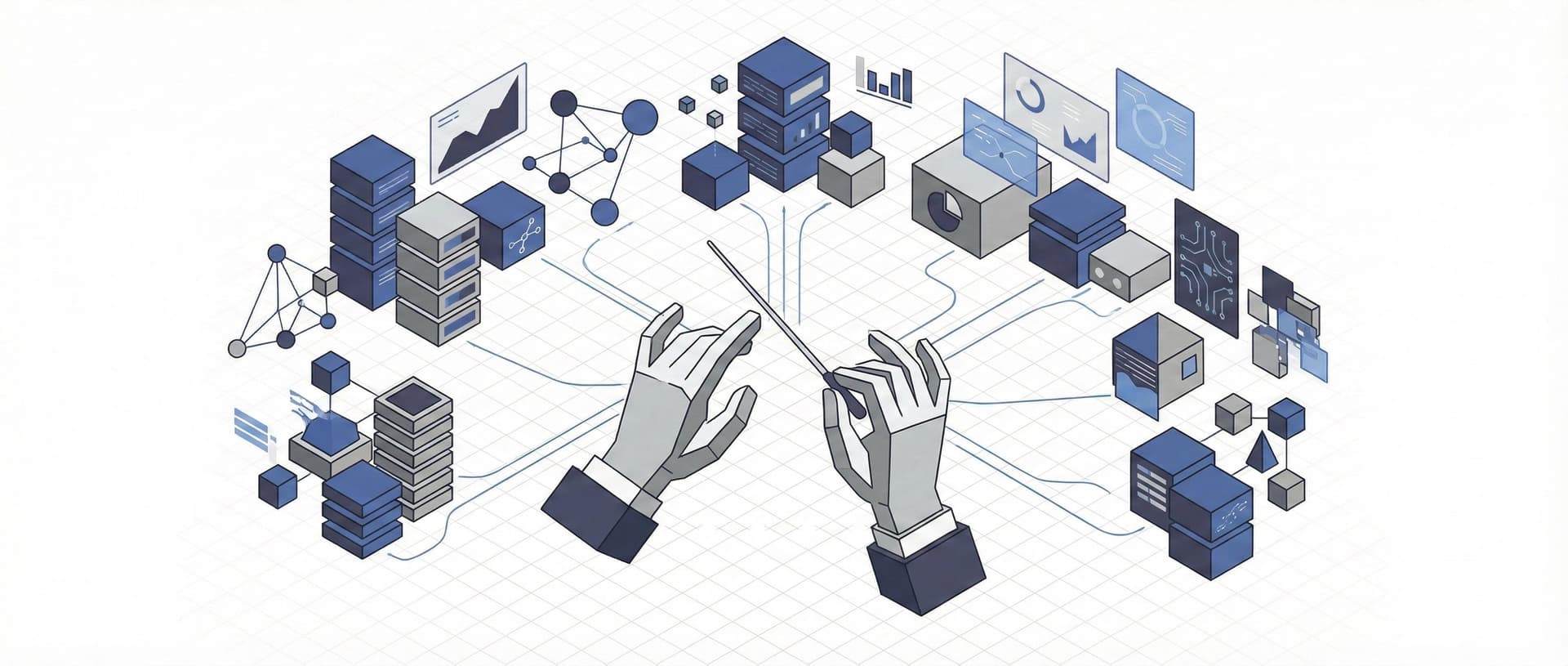
The 8 Roles Being Transformed
Every role in the modern agency is evolving. Some dramatically, some subtly—but none will remain unchanged. Here's how each function is shifting:
Junior / Entry-Level → AI Workflow Orchestrator & Quality Controller From grunt work to AI supervision and quality assurance AI Exposure: Very High
Account Manager / AE → Client Success Strategist & Relationship Architect From coordination to consultation and outcome ownership AI Exposure: High
Media Planner / Buyer → Audience Architect & AI Validation Expert From manual buying to agentic oversight and strategy AI Exposure: Very High
Programmatic Trader → Autonomous Media Orchestrator & AI Trading Strategist From button-pushing to system architecture AI Exposure: Very High
Creative (Copy / Design) → Creative Curator & Brand Steward From creation to curation and brand guardianship AI Exposure: High
PR Professional → GEO Strategist & Reputation Risk Predictor From SEO to Generative Engine Optimization AI Exposure: High
Strategist / Planner → Systems Strategist & Model-Informed Architect From research to AI-enabled insight and framework design AI Exposure: Medium-High
Agency Leadership → AI Governance Lead & Transformation Architect From P&L management to AI ethics, strategy & new business models AI Exposure: Medium
Let's examine each in detail.
1. Junior / Entry-Level Associate
Traditional Responsibilities:
- Building media lists and contact databases
- Taking meeting notes and updating CRMs
- Drafting basic social posts and first-pass press releases
- Scheduling content and managing calendars
- Compiling coverage reports and pulling performance data
- General administrative coordination
Why This Role Faces Highest Disruption:
Entry-level roles are where AI automation hits hardest. The "grunt work" that served as a rite of passage for newcomers—building spreadsheets, resizing assets, drafting initial copy—is precisely what AI does fastest and cheapest. Many agencies are cutting junior hiring because AI handles these tasks 24/7 at near-zero marginal cost.
This creates a paradox: fewer apprentice tasks to learn from, yet the skills developed through those tasks remain essential for senior roles.
What They're Becoming: AI Workflow Orchestrator & Quality Controller
Tomorrow's junior won't type every email or resize every image. They'll manage AI tools and ensure quality. Their day might include:
- Feeding well-crafted prompts into content generators
- Reviewing outputs for accuracy, tone, and brand voice
- Acting as the crucial human-in-the-loop—the final set of eyes catching AI mistakes
- Maintaining prompt libraries and standard operating procedures
- Structuring content for AI reuse with proper naming conventions and metadata
The key skill shift is from execution to orchestration. Prompt engineering—knowing how to format instructions so AI produces business-ready outputs—becomes foundational. But so does editorial judgment: the ability to distinguish genuinely good work from "just average" AI output.
As one expert noted: "10x marketers with taste and experience? They're about to become 100x marketers. Entry-level talent without domain knowledge? They're stuck in the same place, or worse."
The Opportunity:
Paradoxically, AI frees juniors to contribute meaningfully earlier in their careers. One agency head observed that her young marketers now focus more on "strategic and conceptual work while AI drafts the first versions," accelerating their growth. By offloading rote tasks, AI "gives them a chance to shine faster" in creative thinking and storytelling.
But this requires bringing capabilities AI lacks: understanding context, creativity, and cultural nuance. The junior who knows why a trending TikTok sound matters for a brand—and can wield AI to act on that insight—will be indispensable.
2. Account Manager / Account Executive
Traditional Responsibilities:
- Primary client contact for status updates and expectation management
- Converting client briefs into internal tasks
- Timeline and budget management
- Coordinating between creative, media, PR, strategy, and analytics teams
- Preparing decks explaining "what we did" and "what's next"
- Defending billable hours
Why This Role is Changing:
Account management has always been communications glue and project administration. These are exactly the functions where AI and workflow tools—email summarization, auto-updates, agentic project management—are advancing rapidly.
When AI can draft status emails, update timelines automatically, and compile reports from dashboards, the question becomes: what is the account manager's unique value?
What They're Becoming: Client Success Strategist & Relationship Architect
The evolved account manager shifts from task coordination to strategic consultation. Instead of tracking deliverables, they own business outcomes. Instead of translating briefs, they interpret AI-derived insights and advise on strategy.
Key shifts include:
- Owning outcomes, not just campaigns: Moving from "we delivered 10 assets" to "we drove 15% revenue growth"
- Orchestrating the client's AI marketing stack: Aligning agency tools with client martech—CDP, CRM, marketing automation, analytics
- Interpreting AI-derived insights: Using predictive models, Marketing Mix Modeling, and LTV calculations to inform recommendations
- Change management and education: Guiding clients through their own AI adoption, governance, and expectations
The soft skills—emotional intelligence, empathy, relationship-building—become differentiators no algorithm can replicate. While AI crunches performance metrics, only humans can have nuanced conversations about changing consumer sentiment or unexpected cultural trends.
Salesforce research shows that 84% of sellers using generative AI report increased sales by speeding and enhancing customer interactions. AI agents can "analyze years of interaction history, market conditions, and even tone in email exchanges to suggest perfectly timed and worded client outreach."
But the human translates that data into trusted relationships.
3. Media Planner / Buyer
Traditional Responsibilities:
- Audience and channel research
- Building media plans with reach, frequency, and budget allocations
- Negotiating rates with media owners
- Configuring campaigns in ad platforms
- Monitoring and optimizing ROAS and CPA
Why This Role Faces Major Disruption:
Media planning and buying is highly exposed to automation. Holding-company AI platforms like WPP Open Intelligence and Publicis CoreAI are automating planning and optimization end-to-end. Industry forecasts suggest "AI buying agents are going to be directing upwards of 80% of digital media buys by 2030."
Early pilots of AI agents already execute media buys autonomously, negotiating placements and adjusting spend in real time without human middlemen. One agency test achieved a 40% reduction in execution costs with AI handling 24/7 optimizations.
What They're Becoming: Audience Architect & AI Validation Expert
The planner's role transforms from manually configuring campaigns to designing systems and validating AI decisions. They become strategists who set objectives and guardrails, then oversee AI execution.
Key shifts include:
- Designing audience architectures: Combining first-party, second-party, and modeled data into actionable frameworks
- Validating autonomous media systems: Reviewing AI-generated media plans and simulations; approving or overriding with business context
- Influence mapping: Understanding complex, non-linear customer journeys across streaming, scrolling, and shopping
- Strategic inventory curation: Working with SSPs and publishers on AI-driven supply curation
The human planner validates that strategy makes sense: Are we targeting the right micro-audiences? Is the AI picking up genuine trends or chasing noise? Are automated tactics aligned with brand positioning?
Deep understanding of data and marketing funnels becomes essential. So does the ability to catch when AI recommendations are anomalous or misguided.
4. Programmatic Trader / Trading Desk Specialist
Traditional Responsibilities:
- Campaign setup and trafficking in DSPs
- Real-time bidding management
- Manual daily/hourly optimization of pacing, budgets, CPMs, CTRs
- Pulling performance data from multiple DSPs into spreadsheets
- Supply path optimization
- QA and troubleshooting
- Vendor management and negotiations
Why This Role Faces Existential Pressure:
Here's the uncomfortable truth: most of what programmatic traders do today can already be automated or is being actively automated by DSP platforms and AI agents.
The role is intensely manual and reactive—traders spend most time in platform dashboards, Excel, and coordination tools. This is precisely the work AI excels at.
What They're Becoming: Autonomous Media Orchestrator & AI Trading Strategist
The future trader isn't eliminated—they're elevated from button-pusher to system architect.
Key shifts include:
- Designing and governing autonomous trading agents: Configuring agentic AI systems that independently execute bids, adjust budgets, pause underperformers, and reallocate spend in real time
- Setting strategic guardrails: Brand safety rules, budget caps, performance thresholds, approved inventory lists
- Focusing on incrementality and experimentation: Designing geo-holdout tests, A/B tests, and lift studies to measure true incremental impact
- Client education and AI translation: Explaining what AI agents are doing and why
As one industry expert emphasized: "Traders who don't learn to manage and optimize these agents will be left behind."
5. Creative Copywriter / Designer
Traditional Responsibilities:
- Originating content from scratch
- Drafting headlines, scripts, and campaign copy
- Designing layouts and visual assets
- Producing variants for different platforms
- Iterating through review cycles
Why This Role is Transforming:
Generative AI has drastically changed creative workflows. Tools like ChatGPT draft copy options instantly. Image generators produce design concepts in seconds. Video generators create short clips on demand.
Instead of one idea at a time, thousands of variations are now possible. The challenge shifts from creation to selection.
What They're Becoming: Creative Curator & Brand Steward
The human creative evolves from sole originator to editor, curator, and guide for AI.
Key shifts include:
- Designing creative systems, not one-offs: Building prompt libraries that define tone, structure, and story arcs for brands
- Curating and elevating: Reviewing AI-generated options, picking and refining the best
- Translating brand "vibes" into machine-readable instructions: Encoding archetypes, values, taboos, and style rules into prompts and guardrails
- Collaborating tightly with data: Using performance insights to iterate creative concepts
A noted concern is the rise of "just good enough" creative flooding the market. As one expert warned: "The threat isn't low-quality AI output, but the normalization of 'just good enough' creative at massive volume." When everyone uses the same generative models, brand content risks converging toward homogenous mediocrity.
The creative's mission is preventing that drift—pushing AI outputs above the generic baseline while maintaining distinctive brand voice. As Phillip Maggs, Creative Director at Superside, noted: "In this new AI era, people can become creative directors faster. Someone has to be the tastemaker."

6. Public Relations (PR) Professional
Traditional Responsibilities:
- Relationship building with journalists
- Drafting press releases, op-eds, and briefing documents
- Monitoring media coverage and sentiment
- Crisis communications and reputation management
- SEO optimization for visibility
Why This Role is Evolving:
The rise of generative AI is changing how information is discovered. More people ask questions to AI assistants—ChatGPT, Claude, Perplexity—rather than searching Google traditionally. This has massive implications for PR.
Research firm Profound raised $20 million to tackle what VCs called a "hair on fire problem" for brands: over 30% of inbound leads now research with ChatGPT before contacting sales. Visitors arriving via AI citations convert at rates 12-18% higher than traditional organic traffic.
What They're Becoming: GEO Strategist & Reputation Risk Predictor
Tomorrow's PR professional focuses on "Generative Engine Optimization" (GEO)—ensuring brand content is found and accurately presented by AI models.
Key shifts include:
- Optimizing for LLMs and assistant ecosystems: Ensuring ChatGPT-type systems surface official, accurate, recent brand information
- Structuring content for AI consumption: Writing in ways AI algorithms can easily ingest—proper metadata, sources, FAQ structures
- Building predictive reputation models: Using AI to detect early crisis signals via social chatter and sentiment anomalies
- Verifying authenticity and provenance: Combating deepfakes and misinformation with verifiable, timestamped content
The press release may have a renaissance. As one analyst noted: "In an era where AI is making it harder to trust the authenticity of online content, the press release—as a reliable, timestamped source—is as important as ever." Press releases are heavily cited by large language models as factual references.
7. Strategist / Planner
Traditional Responsibilities:
- Insight development: audience, category, competitor, trend analysis
- Brand positioning and messaging frameworks
- Channel strategy and integrated campaign planning
- Research commissioning and data interpretation
- Performance analysis and KPI tracking
Why This Role is Evolving:
AI is turbocharging research, insight generation, clustering, and forecasting. What once required weeks of data scientist work can now happen in minutes.
But models require framing, validation, and interpretation. Raw AI output is often unusable without human strategic overlay.
What They're Becoming: Systems Strategist & Model-Informed Architect
The strategist becomes the translator between AI capabilities and brand needs.
Key shifts include:
- Defining how data, models, and content interact: Where to gather data, how to structure it, which models to apply
- Using AI for segmentation, journey mapping, demand forecasting, scenario modeling
- Building strategic guardrails: What the brand will and won't do with AI
- Translating model outputs into clear, human strategies and briefs
The strategist ensures AI insights become actionable frameworks—not just data dumps, but narratives that guide creative and media teams.
8. Agency Director / Senior Leadership
Traditional Responsibilities:
- Managing talent and P&L
- Business development and client relationships
- Overseeing creative and media initiatives
- Setting agency vision and ensuring quality
Why This Role is Expanding:
Agency leaders now face entirely new decision categories: AI governance, ethical risks, workforce restructuring, and business model transformation.
With AI touching every agency function, leadership must establish policies, ensure compliance, and mitigate risks that didn't exist five years ago.
What They're Becoming: AI Governance Lead & Transformation Architect
Key shifts include:
- Governing AI use across the organization: Policies for how AI is used in client work, legal compliance, ethical risk mitigation
- Preventing "AI washing": Regulators are cracking down on false claims about AI capabilities (the SEC fined two firms $400k for misleading AI statements)
- Reimagining talent strategy: Integrating new specialist roles (prompt engineers, data scientists) into traditional creative environments
- Championing new business models: Piloting outcome-based pricing, developing proprietary AI products, creating IP-based revenue streams
Leaders must also guide teams through change—crafting narratives that AI will augment rather than replace, while creating training programs so employees at all levels gain AI literacy.
As one industry report noted: while over half of marketers use AI, less than 35% of organizations have plans to increase investment in AI governance and oversight. Leadership must bridge that gap.
The Imperative: Adapt or Be Designed Out
The transformation is not coming—it's here. With 73% of Publicis' operating model already AI-powered and WPP employees building their own AI agents through platforms like OMA, the window for adaptation is narrowing.
But this is not a zero-sum story. Marketers using AI are 44% more productive, saving an average of 11 hours per week. Those who partner with AI are 3.7x more likely to hit quota.
The dividing line is clear: those who see AI as a tool to amplify their expertise will thrive; those who see it as a threat to avoid will struggle.
The future belongs to orchestrators, not executors. The question is: will you design the systems, or will the systems design you out?

In Part 2, we'll explore the entirely new roles emerging in AI-powered agencies, the specific skills you need to develop, and a practical 90-day action plan for future-proofing your career.
About the Author
Vincent is an AI Enablement & Automation Architect and founder of Nexolve, which operates as a white-label AI department for agencies. With over 25 years of experience in marketing, PR, and media, he helps agencies navigate the shift from execution to orchestration through Human-First Automation—the principle that AI should amplify humans, not replace them.
Sources & Citations
This article draws on research from:
- McKinsey 2025 Global Survey on AI
- Sunup Research Report: AI's Effect on the Marketing Industry (August 2025)
- Campaign US: 2025 Agency Performance Review
- Forrester: The State of Generative AI Inside U.S. Agencies 2024
- WPP announcements on WPP Open and workforce transformation
- Publicis Groupe reports on CoreAI platform
- Function Point 2025 Creative Agency Industry Report
- SEO.com: AI Marketing Statistics 2025
- Marketing Dive industry coverage
- Fortune: Creative workers and AI agents (December 2025)