The Role Your Agency Doesn't Have (But Desperately Needs)
Agencies are bleeding time and money on manual processes—reporting, onboarding, admin—that could be automated. This article makes the case for a dedicated AI and automation specialist: someone who can identify inefficiencies and build systems that give your team time back for the work that actually matters.
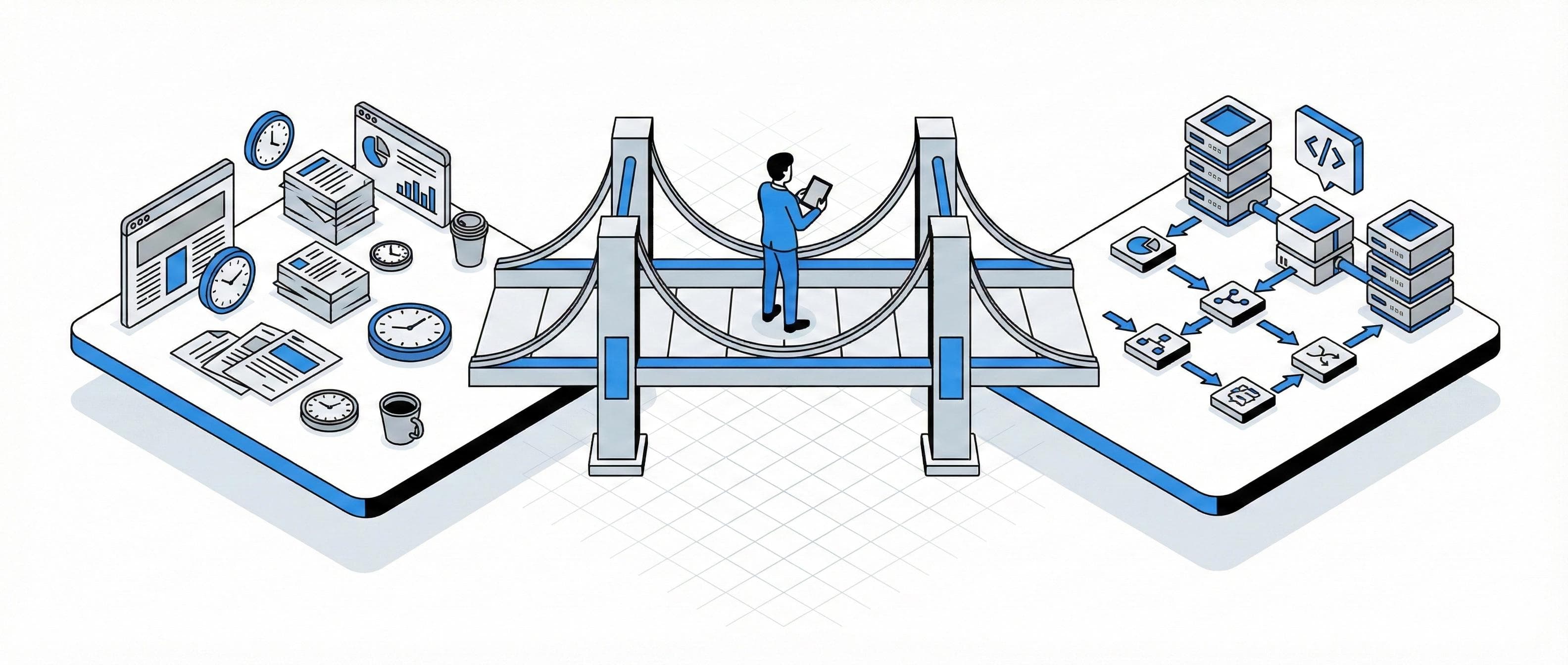
Your team spent 2.5 hours building that client report last Friday. Next Friday, they'll do it again. And the Friday after that.
That's 130+ hours a year. Per client.
If you've got 20 clients, that's 2,600 hours annually—more than a full-time salary's worth of work—spent pulling data from tabs, copying numbers into slides, and formatting the same charts your team formatted last month.
If you've got 20 clients, that's 2,600 hours annually wasted
More than a full-time salary's worth of work—spent pulling data from tabs, copying numbers into slides, and formatting the same charts your team formatted last month.
Here's the uncomfortable part: you probably don't bill for most of it. It's just absorbed as "part of the job." The cost of doing business.
Except it isn't. It's the cost of not having someone who knows how to fix it.
I've spent 25 years working with agencies across marketing, PR, and media. The pattern is almost universal: brilliant people doing repetitive work because "that's how we've always done it." The unofficial motto might as well be "if it ain't broke, don't fix it."
But here's what I've learned: it is broken. You've just normalised the breakage.
The account manager who spends every Friday afternoon assembling reports instead of analysing them? Broken. The onboarding process that takes two weeks because you're chasing clients for platform access and brand assets? Broken. The campaign learnings that live in someone's head—or worse, in a folder no one can find—instead of being searchable institutional knowledge? Broken.
None of this is unfixable. Most of it isn't even complicated. What's missing isn't better tools. Agencies are drowning in tools. What's missing is someone who can look at your operations, identify where you're haemorrhaging time and cost, and build solutions that give that back.
That someone is an AI and automation specialist. And if you don't have one—internally or externally—you're competing with one hand tied behind your back.
The Hidden Cost of "Good Enough"

Most agencies don't have an efficiency problem. They have a visibility problem.
When something takes two hours but it's always taken two hours, it stops registering as a problem. It's just how things are. The team adapts. They work late on Fridays to get reports out. They build in buffer time for onboarding because "clients are slow with access." They accept that finding information from last year's campaign means digging through email threads and hoping someone remembers where the files live.
I've seen this from the inside. When I was Head of Digital at various agencies, I watched talented people—people I'd hired for their strategic thinking and creative abilities—ground down by tasks that had no business taking as long as they did. My team was constantly pushed to the edge. Not because they couldn't handle the work, but because the time-consuming operational stuff ate into everything else. By the time they got to the creative work, the thinking work, the stuff they were actually good at and enjoyed, they were already running on fumes.
And then they'd work late anyway. Or take it home. Or log on at the weekend to "catch up" on what they were supposed to do during the week but couldn't, because of client demands, internal meetings, admin, reporting, pitch decks…the usual. You may have 10 accounts to look after but each one of them wants all your time.
For some reason, agency people have accepted this as normal. The late nights. The weekend Slack or WhatsApp messages. (Still amazes me that people give work or clients permission to use thier WhatsApp, but thats another post) The constant feeling of being behind. It's almost worn as a badge of honour. "That's agency life."
It doesn't have to be.
The research backs up what anyone who works in an agency already knows.
The research backs up what anyone who's worked in an agency already knows. 68% of workers regularly spend their time on low-value, inefficient tasks. Forrester found that employees lose 12 hours a week searching for information trapped in silos. McKinsey estimates that 20-30% of operating expenses are wasted on inefficiency: rework, miscommunication, duplicated effort, and processes that haven't been examined in years.
For a £1 million agency, that's £200,000 to £300,000 annually. Not lost to bad hires or failed campaigns. Lost to friction. Lost to "that's how we've always done it."
When I started quietly rolling out automations in my own teams—nothing dramatic, just systematically removing the friction points—I got time back. They got time back. Not to do less work, but to do better work. The kind of work that actually moves the needle for clients and keeps good people from burning out.
The agencies that pull ahead aren't necessarily more talented. They've just stopped accepting "good enough" as the baseline. They've stopped treating operational inefficiency as an unavoidable cost of doing business and started treating it as what it actually is: a problem with a solution.
Where Agencies Actually Bleed Time (And Miss Opportunities)
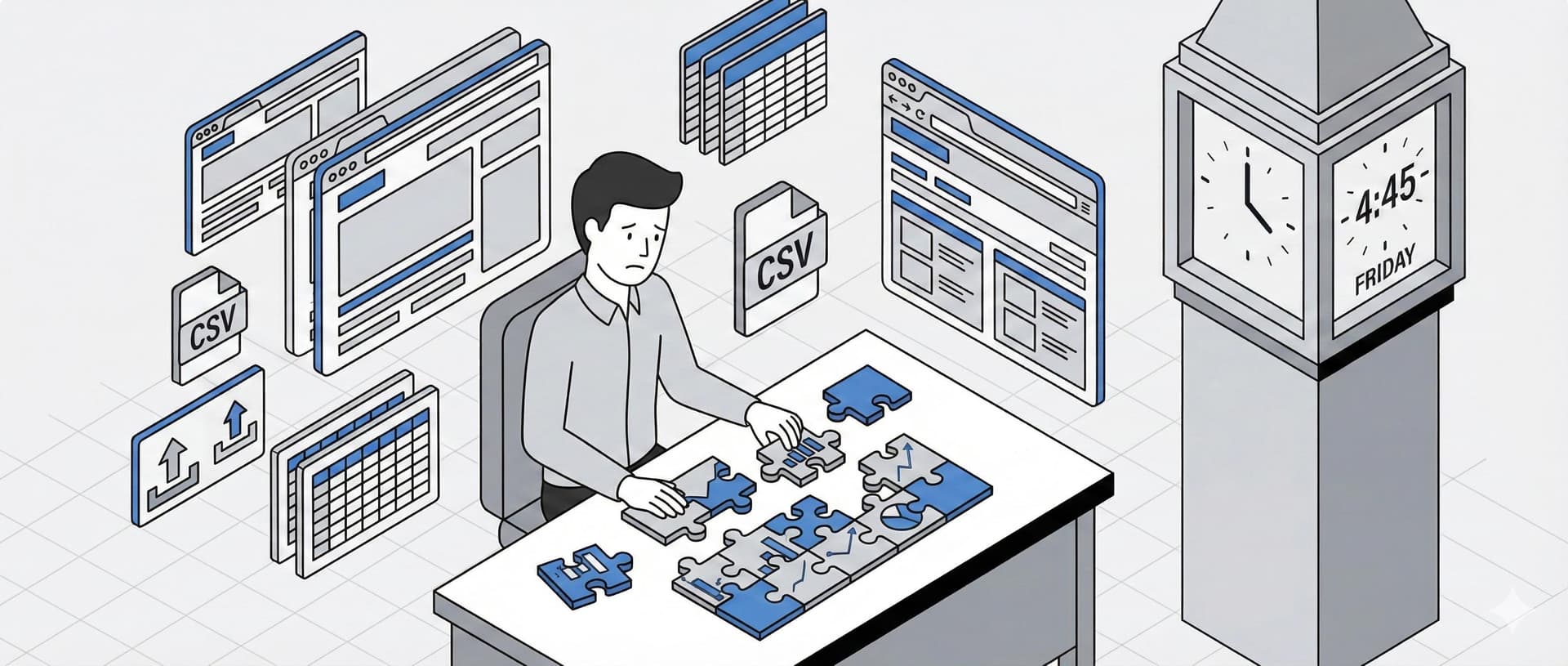
The inefficiencies aren't hiding. They're sitting in plain sight, disguised as "process."
But it's not just about time lost to admin. It's also about capabilities you're not accessing—things that are entirely possible now but aren't happening because no one's built the systems to do them.
Here's where I see agencies losing hours every week, and where they're leaving opportunity on the table:
Client Reporting
Every Friday, the same ritual. Someone opens five or six different tools—Google Analytics, the ad platforms, the social dashboards, maybe a CRM, perhaps an SEO tracker. They export CSVs. Reams of data. Then they try to bring it all together in a spreadsheet, make sense of the numbers across platforms, format it into slides, add some commentary, and send it off. Time spent: anywhere from 2.5 to 5 hours per client.
Here's the thing: most agencies are paying serious money for these tools. Sophisticated platforms with powerful analysis features, custom dashboards, automated alerts, API integrations. And in most cases, teams are using maybe 5% of what the tool can actually do. They're treating enterprise software like a glorified export button.
It's not their fault. No one has time to learn the advanced features when they're already stretched thin. So the tool sits there, capable of doing far more, while your team manually replicates work the software could handle automatically.
Multiply that across your client base. One agency I came across was spending the equivalent of 360 working days a year on manual reporting. That's not a rounding error. That's an entire person's annual output, consumed by copy-paste.
The brutal part? Most of this isn't billed. It's just overhead. And the reports themselves are often backward-looking data dumps rather than genuine insight, because by the time the data's assembled, there's no energy left to actually analyse it.
Client Onboarding
A new client signs. Everyone celebrates. Then the waiting begins.
Five to seven days to get Google Ads access. Another few days chasing brand assets. "We'll send the logo tomorrow" turns into two weeks of back-and-forth over wrong file formats. Meanwhile, your team is technically on the clock but can't actually start work. The client's asking why nothing's happened yet. Your account manager is sending polite follow-up emails while quietly losing their mind.
One agency owner told me their client once asked, mid-onboarding: "Why am I paying for this when you haven't done anything yet?" The access delays weren't their fault—but it didn't matter. The client's first impression was already tarnished.
Institutional Knowledge
This one's invisible until it hurts.
Agencies run dozens of campaigns, often for years. The learnings from those campaigns—what worked, what didn't, which creative outperformed, what the client hates—live in people's heads. Maybe some of it's in scattered documents, old decks, email threads. But it's not searchable. It's not connected. It's certainly not being used to inform new work.
Then someone leaves. And all that knowledge walks out the door with them.
A new account manager picks up the client and starts from scratch, asking questions that were answered two years ago. The client notices. They're repeating themselves. They're losing confidence. And your team is spending time re-learning things the agency already knew.
Pitches and New Business
How much time does your team spend preparing for a pitch? Days, usually. Pulling together credentials, researching the prospect, building the deck, trying to anticipate what they'll ask.
Now imagine this: an AI that analyses the pitch brief against your proposed approach and flags the gaps before the client does. One that pulls relevant case studies from your archive automatically. One that researches the prospect's market, competitors, and recent activity while your strategist focuses on the actual thinking.
This isn't theoretical. It's buildable. But most agencies are still doing it all manually, which means their pitch prep is limited by however many hours they can throw at it.
Creative Production
Your creative team is probably producing variants one at a time. Different formats, different sizes, different headlines for testing. It's painstaking, repetitive, and doesn't scale.
What if you could generate thousands of ad variants in seconds—images and video—then test them against audiences you've built specifically for that purpose? What if brand guidelines weren't a PDF that gets ignored but training data that ensures every AI-assisted output is on-brand from the start?
The agencies doing this aren't working harder. They're testing more, learning faster, and optimising while their competitors are still waiting for the first round of creative amends.
Brand Consistency Across AI Tools
Here's one that's increasingly relevant: every agency is starting to use AI tools for content, creative, strategy support. But most are using generic prompts and getting generic outputs.
The smart play is training AI agents on each client's brand guidelines, tone of voice, historical content, and preferences. So when you use AI to draft copy or generate ideas, it doesn't sound like a robot—it sounds like the client's brand. That's not magic. It's setup. But almost no one's doing it because they haven't thought about AI adoption systematically.
The Admin Tax
Beyond all of this, there's the constant low-level drain: invoicing, time tracking, expense reports, scheduling, status updates, internal reporting. None of it is difficult. All of it takes time. And it fragments attention in a way that makes deep, focused work almost impossible.
Researchers call it "work about work"—the tasks that support the actual work but aren't the work itself. Studies suggest employees spend up to 60% of their time on it. That leaves 40% for the things that actually generate value.
Forty percent.
No wonder people are working evenings and weekends. They're trying to cram a full job into less than half the available time.
Five Things You Probably Didn't Know You Could Automate
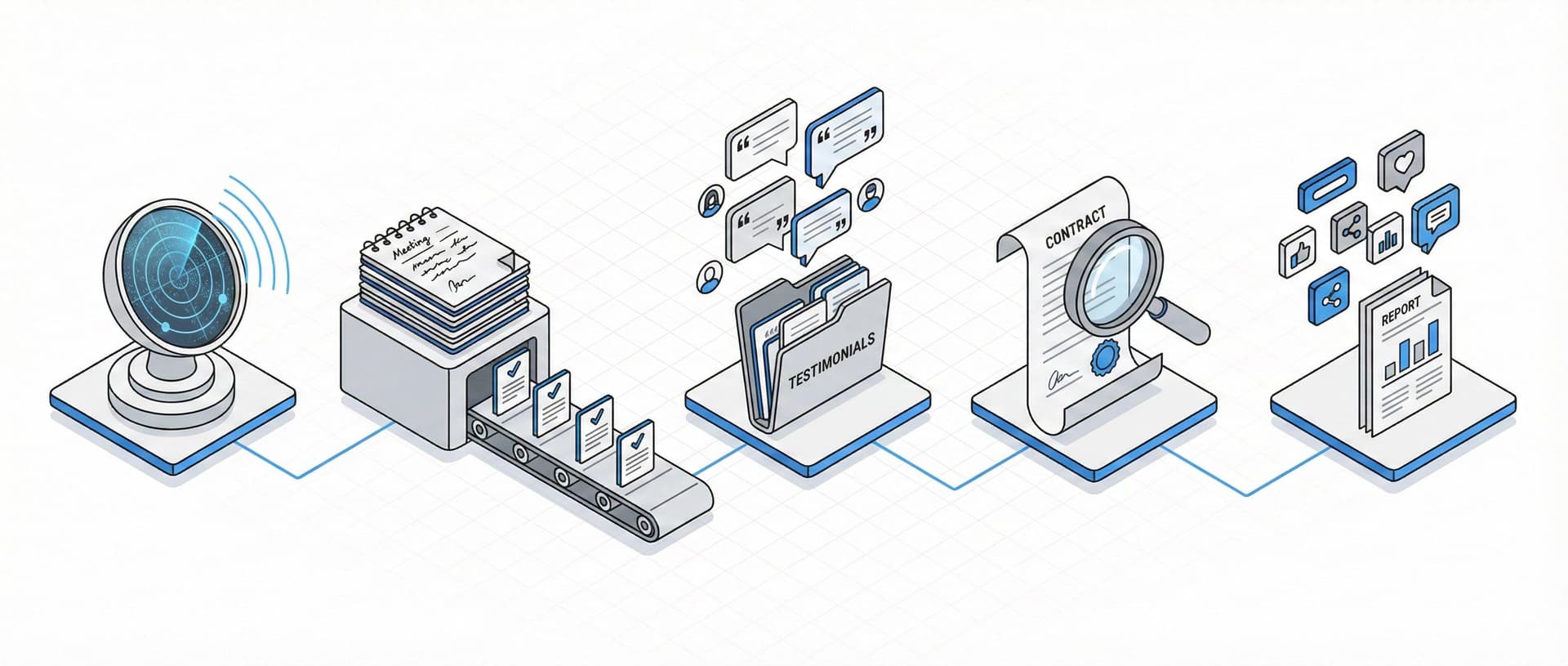
Sometimes the biggest wins come from the tasks you never even considered fixing. Here's a quick hit list—food for thought:
1. Competitor monitoring
Stop manually checking competitor websites, social feeds, and ad libraries. Set up automations that track changes, new campaigns, and messaging shifts—then deliver a summary to your inbox or Slack. You'll know what they're doing before your client asks.
2. Meeting notes to actions
Every meeting generates actions, follow-ups, and ideas. Instead of someone typing them up and hoping they land in the right place, an AI agent can process the transcript, extract the actions, and route them directly to your project management tool—assigned and prioritised.
3. Testimonial and case study collection
Clients say great things in emails all the time. An automation can flag positive feedback, pull it into a central repository, and even draft case study outlines based on project data. No more scrambling for proof points when a pitch lands.
4. Contract and proposal review
Before you send a proposal or sign a contract, an AI can scan for inconsistencies, missing clauses, or terms that don't match your standard agreements. It won't replace legal review, but it catches the obvious errors before they become expensive problems.
5. Social listening into insight briefs
Rather than just monitoring mentions, automate the analysis. Pull social conversations, reviews, and forum discussions into a system that summarises sentiment, identifies recurring themes, and produces a brief your strategy team can actually use—without anyone manually reading hundreds of posts.
None of these are moonshots. They're all buildable with current tools. The only reason they're not happening in most agencies is that no one's stopped to ask "could this be automated?"
The answer, more often than not, is yes.
What an AI & Automation Specialist Actually Does
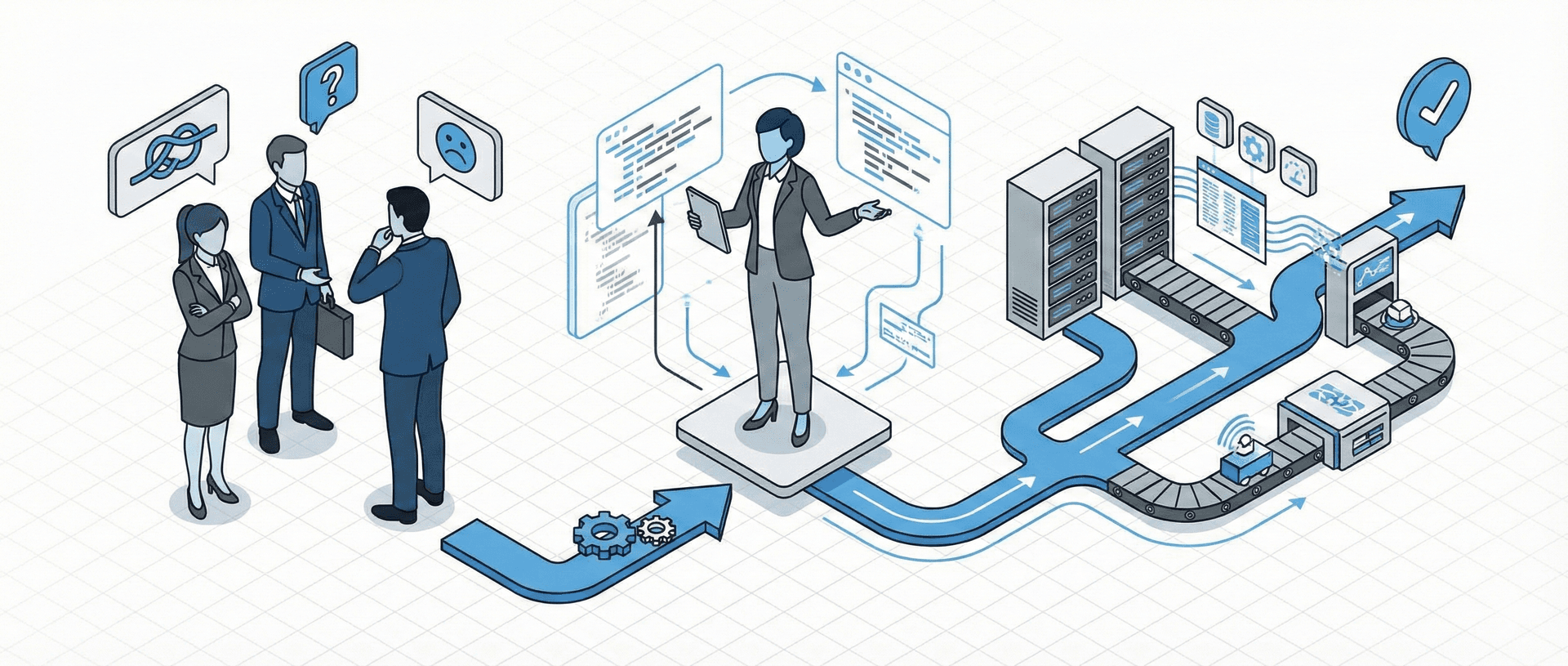
Let's clear something up: this isn't about replacing people. It's about stopping them from doing work that shouldn't require a human in the first place.
An AI and automation specialist is the person who looks at your operations and asks the questions no one's had time to ask. Why does this take three hours? Why are four people touching this before it's done? Why are we manually doing something every week that's identical to what we did last week?
They're the go-to fixer. The person who hears "this is frustrating" and turns it into "this is fixed."
The role sits at the intersection of understanding your business problems and knowing what's technically possible. That second part is crucial. Most agency leaders know something's inefficient. What they don't know is what's actually achievable—what can be automated, what can be streamlined, what can be built once and run forever.
That gap between "this is painful" and "here's the solution" is where an automation specialist lives.
What does the work actually look like?
It starts with diagnosis. Watching how your team works. Mapping the processes that eat time. Identifying the friction points—the handoffs, the waiting, the repeated effort, the data that lives in someone's head instead of a system.
Then it's about building. Not buying another tool and hoping someone figures it out. Building workflows that connect the tools you already have. Automations that trigger when something happens, so humans don't have to remember to do it. Systems that pull data, analyse it, format it, and deliver it—without anyone opening a spreadsheet.
The best automation specialists think in systems, not tasks. They're not asking "how do I make this one thing faster?" They're asking "how do I make this entire process run itself, with a human stepping in only where human judgment actually matters?"
That's the key distinction. Human-in-the-loop, not human-out-of-the-picture. The goal isn't to remove your team from the work. It's to remove the drudgery so they can focus on the parts that require creativity, strategy, and relationships—the parts that actually justify their expertise and your rates.
The compound effect
Here's what agencies often miss: automation compounds.
Fix the reporting process once, and you save hours every week, every client, forever. Build an onboarding workflow once, and every new client benefits from it. Create a knowledge base that captures campaign learnings, and it gets more valuable with every piece of information added.
These aren't one-off wins. They're investments that pay dividends for years. The agency that builds these systems in 2025 isn't just more efficient today—they're structurally more efficient than competitors who are still doing things manually in 2027.
And that gap widens over time.
How I Automated My Own Consultancy
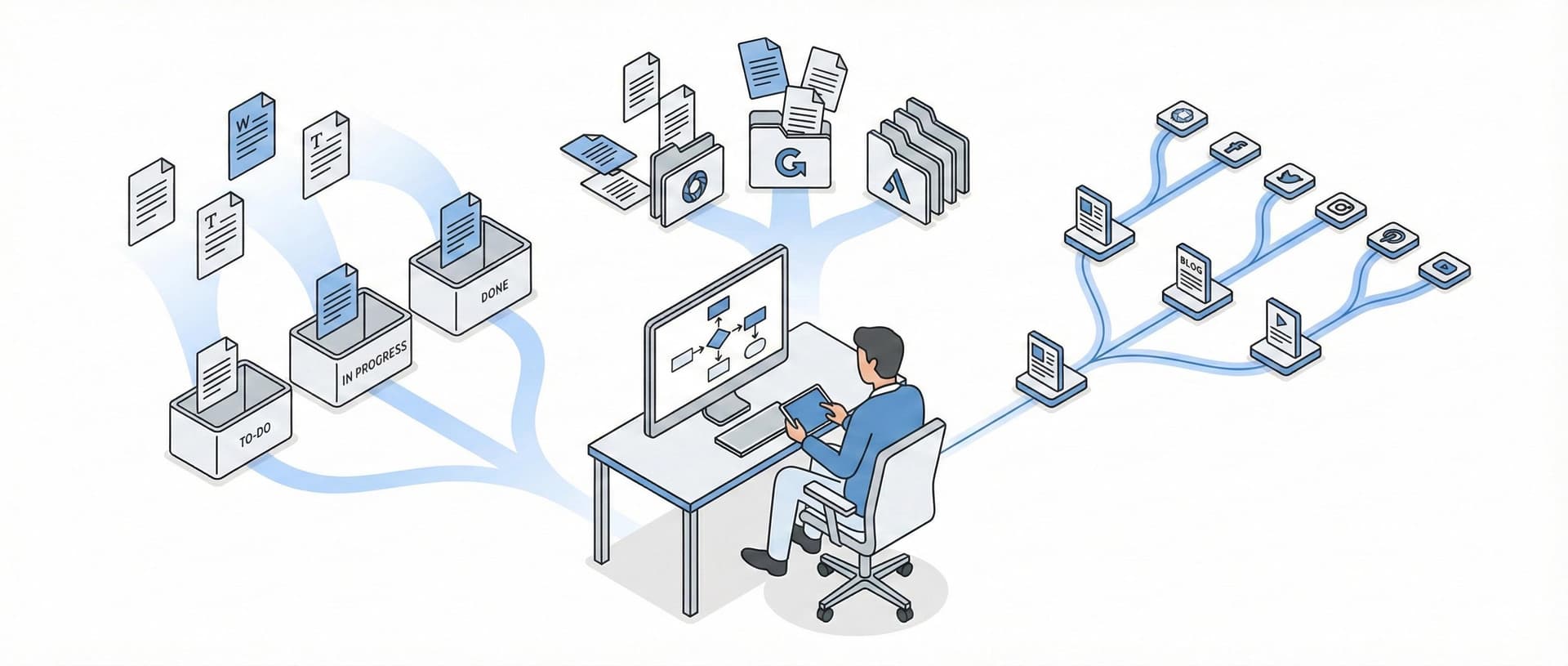
I don't just talk about this. I've built it.
When I set up my own consultancy, I made a deliberate decision: I would not spend my time on work that a system could handle. Every hour I claw back from admin is an hour I can spend on clients, on strategy, on building the business—or, frankly, on not working at 9pm.
Here's what that looks like in practice.
Client setup that runs itself
When I take on a new client, I don't manually create invoices, set up folders, or send welcome emails. I built a workflow that handles it. Client details go in once, and the automation takes over: they're added to my accounting software, a Google Drive folder structure is created with the right permissions, and the onboarding process kicks off. What used to take an afternoon of admin now takes minutes—and I don't touch any of it.
Notes that sort themselves
I capture a lot of ideas and notes throughout the day. Voice memos, quick thoughts, things that occur to me mid-conversation. I built an agent that receives those notes and routes them automatically to the right place. Content idea? Goes to my content system. Client-related thought? Filed against that client. Product concept? Added to my ideas database. I don't have to decide where things live or remember to move them later. The system handles the sorting so I can focus on the thinking.
A knowledge base that actually works
I've created a RAG database—essentially an AI-powered knowledge base—that contains my content, my ideas, past work, and reference material. When I'm writing, or developing a concept, or trying to remember what I said about a topic six months ago, I can query it. It helps me expand ideas, find connections I'd forgotten, and publish faster because I'm not starting from scratch every time. The more I add to it, the more useful it becomes.
Research and validation on demand
I'm always exploring micro-SaaS product ideas. Rather than spending days manually researching markets, competitors, and feasibility, I've built automations that do the heavy lifting. They research, validate, and help me write PRDs—product requirement documents—so I can quickly assess whether an idea is worth pursuing. What used to be a week of scattered research is now a structured output I can review and act on.
Content that flows
My content workflow is largely automated. Blog posts get repurposed into social content with intelligent scheduling. Podcast episodes are transcribed and processed without me lifting a finger—no more paying for manual transcription or waiting days for turnaround. The system handles the repetitive transformation; I handle the editorial judgment.
None of this required a massive budget or a team of developers. It required thinking systematically about where I was spending time, then building solutions piece by piece.
And here's what I've learned: once you start, you can't unsee the inefficiencies. Every manual process starts to look like a problem waiting to be solved. That's not a burden—it's an opportunity. Every hour you automate away is an hour you get back permanently.
If I can do this as a solo operator, imagine what's possible for an agency with ten, twenty, fifty people all doing repetitive work that's ripe for automation.
The ROI Case
Let's talk numbers, because this is where the conversation usually stalls.
Agency leaders hear "AI and automation" and think: another cost. Another tool to pay for. Another thing to implement that'll probably gather dust like the last platform we bought.
But this isn't about buying software. It's about unlocking capacity you're already paying for.
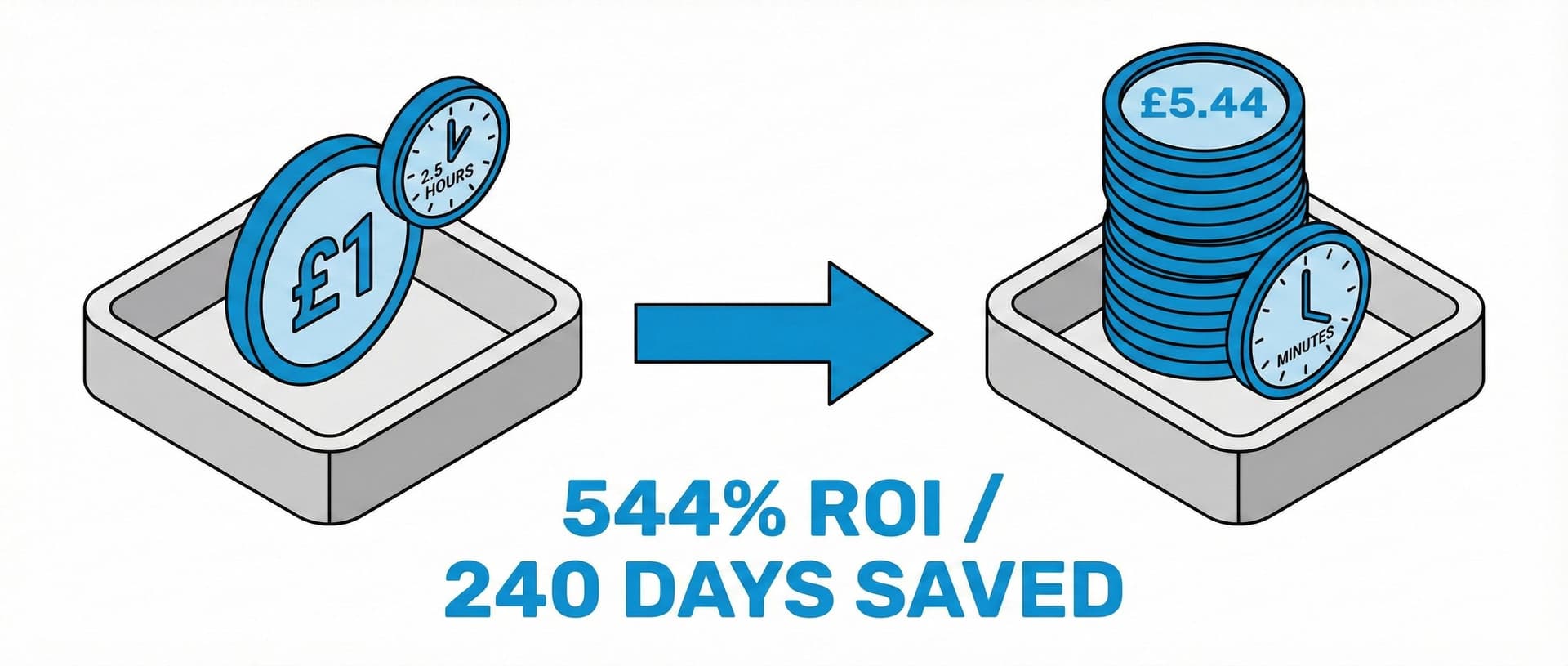
The research on marketing automation ROI is almost absurdly positive. Nucleus Research found an average return of $5.44 for every $1 spent—that's a 544% ROI over three years. A 2024 industry survey found that 76% of companies using automation saw positive ROI within the first year. Not three years. Twelve months.
McKinsey's data is equally striking: businesses using AI in marketing and sales report revenue growth of 5-10%, with two-thirds seeing measurable gains within six months.
But here's the figure that should really get your attention: agencies typically spend 2.5 to 5 hours per client on manual reporting alone. Automate that, and you're not saving pennies—you're reclaiming thousands of hours annually. One agency reported saving 240 days per year after automating their reporting. That's not efficiency. That's transformation.
The real calculation
Forget the industry benchmarks for a moment. Do the maths for your own agency.
How many hours does your team spend on reporting each week? On onboarding each new client? On chasing information, updating spreadsheets, copying data between systems?
Now multiply that by 48 working weeks. Then multiply by your average hourly rate—or better yet, by what that time could generate if spent on billable strategic work instead.
For most agencies, the number is sobering. We're not talking about marginal gains. We're talking about tens of thousands of pounds in recovered capacity. Often more.
The cost of doing nothing
There's another calculation people forget: the cost of not acting.
Every month you delay, the inefficiencies compound. Your competitors who've invested in automation are operating leaner, responding faster, delivering more. They can take on more clients without proportionally increasing headcount. They can offer competitive pricing because their operational costs are lower. They can attract and retain talent because their people aren't drowning in admin.
The gap between automated agencies and manual agencies isn't static. It's widening. And the longer you wait, the harder it becomes to catch up.
What does investment actually look like?
You don't need to hire a full-time automation engineer on day one. Many agencies start with a specialist consultant or fractional support—someone who can audit operations, identify the highest-impact opportunities, and build the first wave of automations.
The investment pays for itself quickly, often within the first few projects. And unlike a software subscription that sits unused, you're paying for implementation—systems that are actually built, actually working, actually saving time from week one.
The question isn't whether you can afford to bring in AI and automation expertise.
The question is whether you can afford to keep operating without it.
Why Agencies Don't Do This (And Why That's Changing)
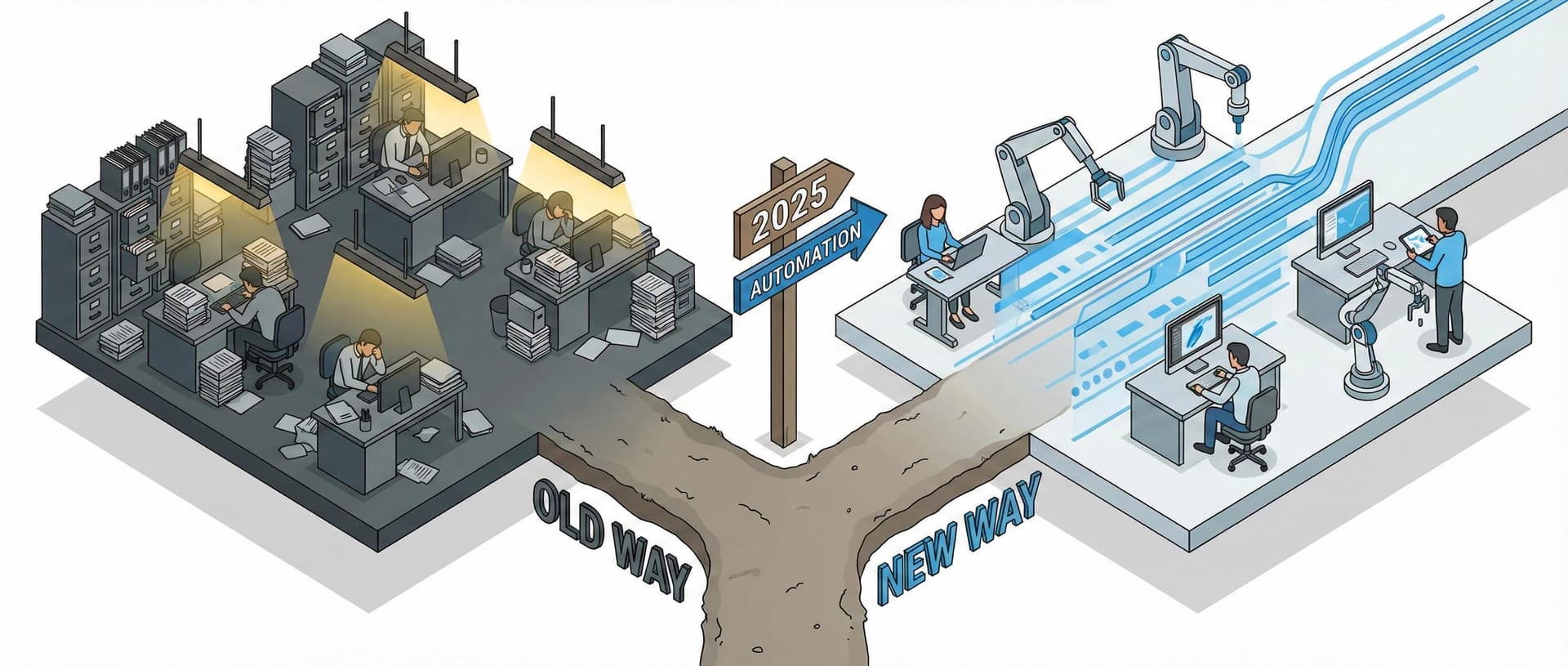
If the ROI is so clear, why aren't more agencies doing this?
It's a fair question. And the answer isn't that agency leaders are stupid or resistant to change. It's that several very real barriers get in the way.
"We don't know where to start"
This is the big one. Most agency owners and ops leads know things could be better. They feel the inefficiency. But when they look at AI and automation, they see a vast landscape of tools, platforms, jargon, and possibilities—and no clear entry point.
Where do you even begin? Which processes should you automate first? What's realistic and what's hype? Without someone who can translate the possibilities into practical steps, it's easier to stick with the status quo.
"We don't have the skills in-house"
Agencies hire strategists, creatives, account managers, analysts. They don't typically hire people who understand workflow automation, API integrations, or how to build an AI-powered knowledge base.
The research confirms this is widespread: 38% of businesses cite lack of expertise as their top barrier to automation. Nearly half of marketing departments say they simply don't have the technical knowledge to implement AI effectively.
This isn't a criticism—it's a structural gap. Agencies have been built around creative and strategic capabilities, not operational technology. The skillset required to fix these problems hasn't traditionally been part of the agency model.
"We've bought tools before and they didn't work"
There's a graveyard of unused software subscriptions in every agency. Platforms that were meant to fix everything, launched with fanfare, then quietly abandoned because no one had time to learn them properly or they didn't quite fit the workflow.
That experience breeds scepticism. "We tried automation once" becomes a reason not to try again.
But here's the distinction: buying a tool isn't the same as building a system. Tools sit on a shelf. Systems are designed around how your agency actually works, connecting the tools you already have into workflows that run without constant attention. The problem was never the technology. It was the implementation.
"We're too busy to fix it"
The cruellest irony. The inefficiencies consume so much time that there's no time left to address them. Everyone's head-down, getting through the week, putting out fires. The idea of pausing to fix the underlying problems feels like a luxury no one can afford.
This is why the change often has to come from outside. An internal team stretched to capacity can't simultaneously do the work and redesign how the work gets done. You need someone whose job is specifically to identify and solve these problems—not squeeze it in between client demands.
Why it's changing now
Three things are shifting the equation.
First, the technology has matured. Five years ago, meaningful automation required developers and significant investment. Today, tools like n8n, Make, and Zapier—combined with AI capabilities—put sophisticated automation within reach of much smaller budgets. The barrier to entry has dropped dramatically.
Second, competitive pressure is building. Agencies that have embraced automation are winning pitches, operating more profitably, and scaling without proportional headcount increases. The early adopters are becoming case studies. The rest of the industry is starting to notice.
Third, talent expectations are changing. The best people don't want to spend their careers doing work a machine could handle. They want to think, create, and solve interesting problems. Agencies that can't offer that will struggle to attract and keep top performers—especially younger talent who've grown up expecting technology to handle the mundane.
The window for "we'll get to it eventually" is closing. The agencies that act now will be the ones setting the pace. The rest will be playing catch-up.
What to Look For
So you're convinced. You want to bring in AI and automation expertise. The question becomes: what does the right person—or partner—actually look like?
Not all automation specialists are created equal. And the difference between a good one and a wrong fit can be the difference between systems that transform your operations and another expensive experiment that goes nowhere.
Systems thinking, not just tool knowledge
Anyone can learn to use a tool. What you need is someone who thinks in systems.
That means looking at a problem and seeing not just the immediate task, but the entire flow: where does the input come from? Who touches it and why? Where does it go next? What triggers it? What could go wrong?
A systems thinker doesn't just automate a single task. They redesign the process so the task becomes part of a larger, self-sustaining workflow. They ask "how does this connect to everything else?" rather than "how do I make this one thing faster?"
Understanding of agency operations
Technical skills matter, but context matters more.
Someone who's worked in or with agencies understands the rhythms: client demands, campaign cycles, the pressure points around reporting and pitches, the way scope creep happens, the politics of account management. They know what "Friday afternoon reporting" actually feels like.
Without that understanding, you get solutions that are technically elegant but practically useless. Automations that don't fit how your team actually works. Workflows that assume a level of process discipline that doesn't exist in the messy reality of agency life.
Look for someone who speaks your language—who's felt the pain points firsthand, not just read about them.
Human-first philosophy
This is non-negotiable for me, and it should be for you too.
The goal of automation is to amplify your people, not replace them. The best specialists understand that AI and automation should handle the drudgery so humans can focus on judgment, creativity, and relationships—the things that actually require a person.
Be wary of anyone who talks about automation purely in terms of headcount reduction or who sees humans as a problem to be engineered out. That's a recipe for brittle systems and a demoralised team.
You want someone who asks "where is human input genuinely valuable here?" and designs around that. Human-in-the-loop, not human-out-of-the-picture.
Ability to translate
The right person can talk to your operations lead, your account directors, and your finance team—and make sense to all of them.
This is rarer than it sounds. Technical people often struggle to explain what they're building in terms non-technical people understand. Business people often can't articulate their problems in ways that lead to technical solutions.
You need a translator. Someone who can hear "this is frustrating" and turn it into a system spec. Someone who can explain what an automation does and why it matters without resorting to jargon.
Pragmatism over perfection
Finally, look for someone who builds iteratively.
The wrong approach is a six-month discovery phase followed by a grand unveiling of a "complete" system. By the time it's done, requirements have changed, the team's moved on, and half the automations don't fit anymore.
The right approach is quick wins first. Identify the highest-impact, lowest-complexity opportunities. Build them. Deploy them. Learn from them. Then move to the next layer.
You want someone who can show results in weeks, not quarters. Someone who treats automation as an ongoing capability, not a one-off project.
The Bottom Line

Here's the reality: the work your team is doing manually today will be automated eventually. The question is whether you'll be the one doing it—capturing the efficiency, building the competitive advantage—or whether you'll be scrambling to catch up after your competitors have already made the shift.
The agencies that thrive over the next five years won't necessarily be the ones with the biggest clients or the flashiest creative. They'll be the ones that operate smarter. The ones that stopped accepting inefficiency as inevitable. The ones that gave their people time back to do the work that actually matters.
It starts with a single question: where is your team spending time that isn't adding value?
Maybe it's Friday afternoon reporting. Maybe it's the onboarding chaos every time a new client signs. Maybe it's the knowledge that lives in people's heads instead of a system. Maybe it's all of it.
Whatever it is, it's fixable. Probably faster and more affordably than you think.
If you've read this far, you already know something needs to change. The late nights, the weekend catch-ups, the talented people doing work that's beneath their abilities—none of that is sustainable. And none of it is necessary.
The tools exist. The approaches are proven. What's missing is someone to make it happen.
Three ways to start:
1. Audit your time drains. Pick one week. Ask your team to note every task that feels repetitive, manual, or frustrating. You'll have your hit list within days.
2. Start with one process. Don't try to automate everything at once. Pick the most painful, most frequent task—probably reporting—and fix that first. The momentum builds from there.
3. Bring in expertise. Whether it's a fractional specialist, a consultant, or an eventual hire, get someone whose job is specifically to solve these problems. Your team is too busy doing the work to redesign how the work gets done.
The agencies still running on manual processes in 2027 will look back at this moment and wonder why they waited. Don't be one of them.