What Actually Happens When You Bring an Automation Specialist Into Your Agency
A week-by-week breakdown showing agency owners exactly how an embedded automation specialist transforms operations - from pitch deck generators to proactive client updates to timesheets that just get done.
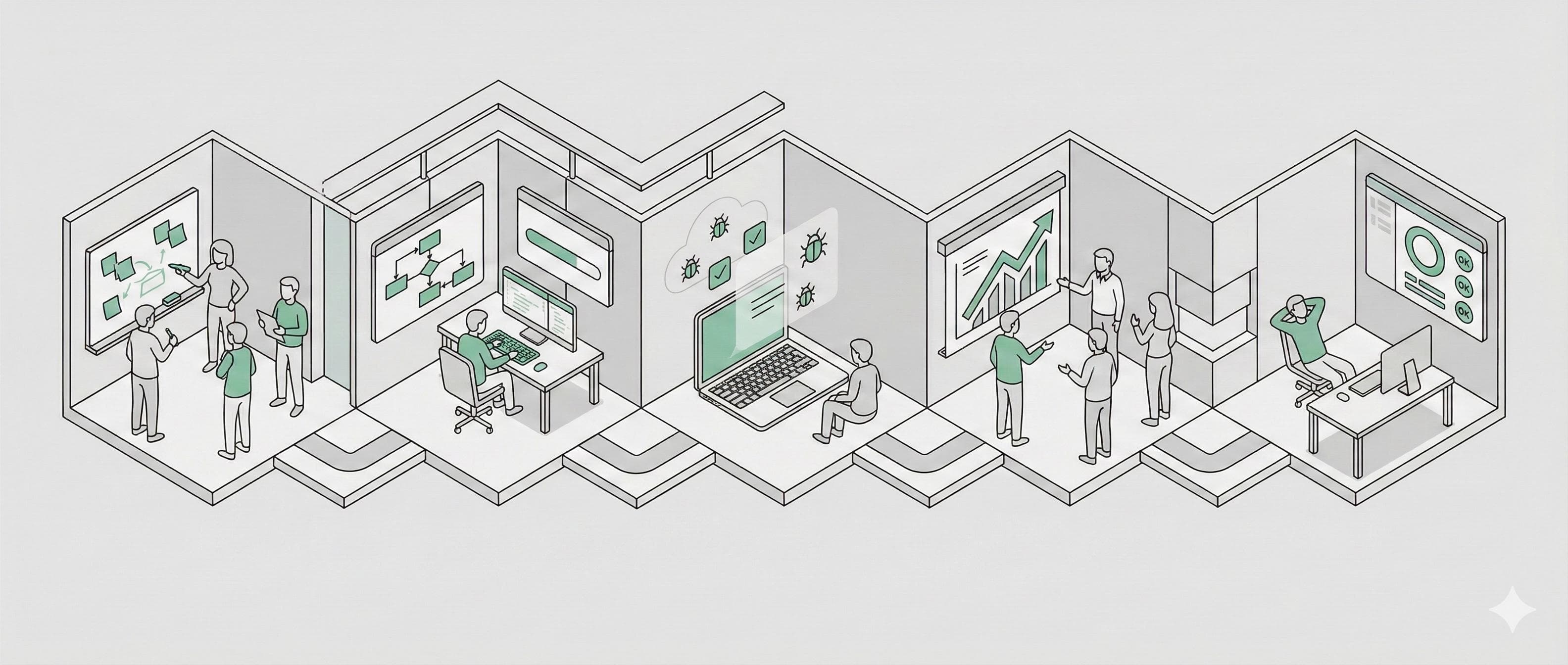
You've heard the pitch. AI and automation will revolutionise your agency. Efficiency gains. Time savings. Competitive advantage. But what does that actually look like in practice? What does an automation specialist do all day, and how does their work connect to the reality of running a marketing, PR, or media agency?
Here's a transparent breakdown of what a typical week looks like when you have an automation specialist embedded in your agency — and more importantly, how their work translates into tangible value for your teams and your bottom line.
Monday: Discovering What's Actually Slowing Your Team Down
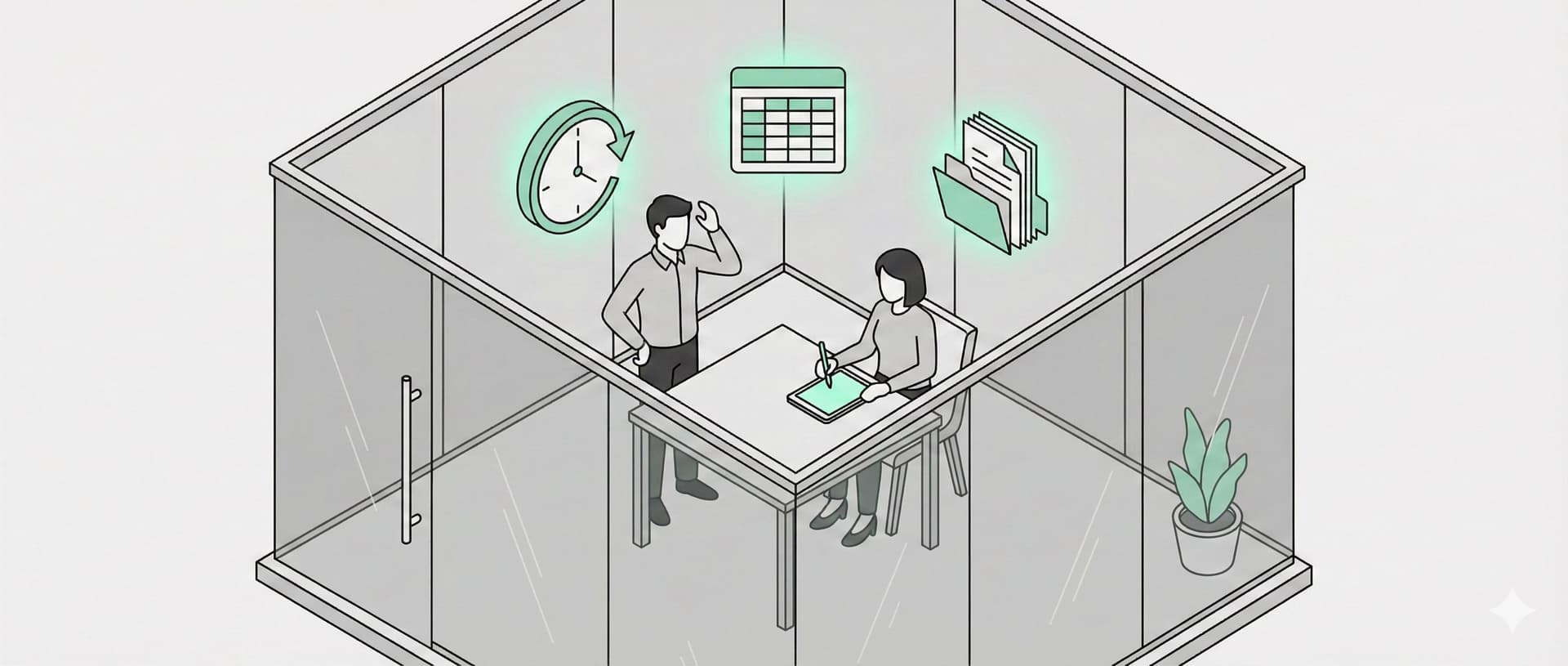
9:00 AM — The Weekly Team Sync
The week starts with your automation specialist sitting down with your team leaders — account directors, creative leads, project managers, finance. The agenda is refreshingly simple: what's frustrating you this week, and what do you wish existed?
These aren't abstract strategy sessions. They're practical conversations that surface the real inefficiencies hiding in your operations.
Last Monday, for example, your senior account manager mentioned she'd spent most of Friday pulling together a competitive analysis for a pitch. Manually checking competitor social channels, copying headlines from trade press, formatting it all into something presentable. Four hours, easily. And she's got three more pitches this month.
Your PR lead flagged that the team is still manually logging media coverage into a spreadsheet. Every mention, every link, every outlet — typed in by hand. It works, but it's tedious and things get missed.
Your finance manager — and this one surprised everyone — brought up timesheets. Not the system itself, but the chasing. Every month, the same ritual: hunting down the people who haven't submitted, sending reminders, escalating to managers. Hours spent on what should be a non-issue.
The creative director mentioned the pre-pitch scramble. Every time there's a new business opportunity, someone has to pull together inspiration references, competitor creative, mood boards. It's valuable work, but it's always last-minute and rushed.
Your people know where the problems are. They've just never had someone whose job it is to solve them.
11:00 AM — Deep Dives With the People Who Feel the Pain
After the group sync, your automation specialist books thirty-minute slots with anyone who flagged something worth exploring.
With your account manager, they map out exactly what a competitive report involves. Which platforms does she check? What information matters most? How does she structure the final document? They're not just understanding the task — they're understanding the thinking behind it.
With finance, they dig into the timesheet problem. Turns out, the issue isn't that people refuse to do timesheets — it's that they forget until it's too late, then rush through them inaccurately. What if the system reminded them at the right moment? What if it pre-filled based on calendar data? What if it just... happened, mostly automatically?
By the end of these conversations, there's a list of possibilities. Not all will become projects, but the important ones have been identified.
2:00 PM — Documenting What Matters
Before building anything, your automation specialist writes up what they've learned. One-page briefs for each potential project. What's the problem? Who experiences it? How often? What does the current process look like? What would "solved" look like?
These documents become the foundation for prioritisation. The competitive report automation goes near the top — it's high-frequency, high-frustration, and directly connected to winning new business. The timesheet automation gets flagged too — less glamorous, but the finance team's relief would be palpable.
Tuesday: Building Solutions That Actually Ship
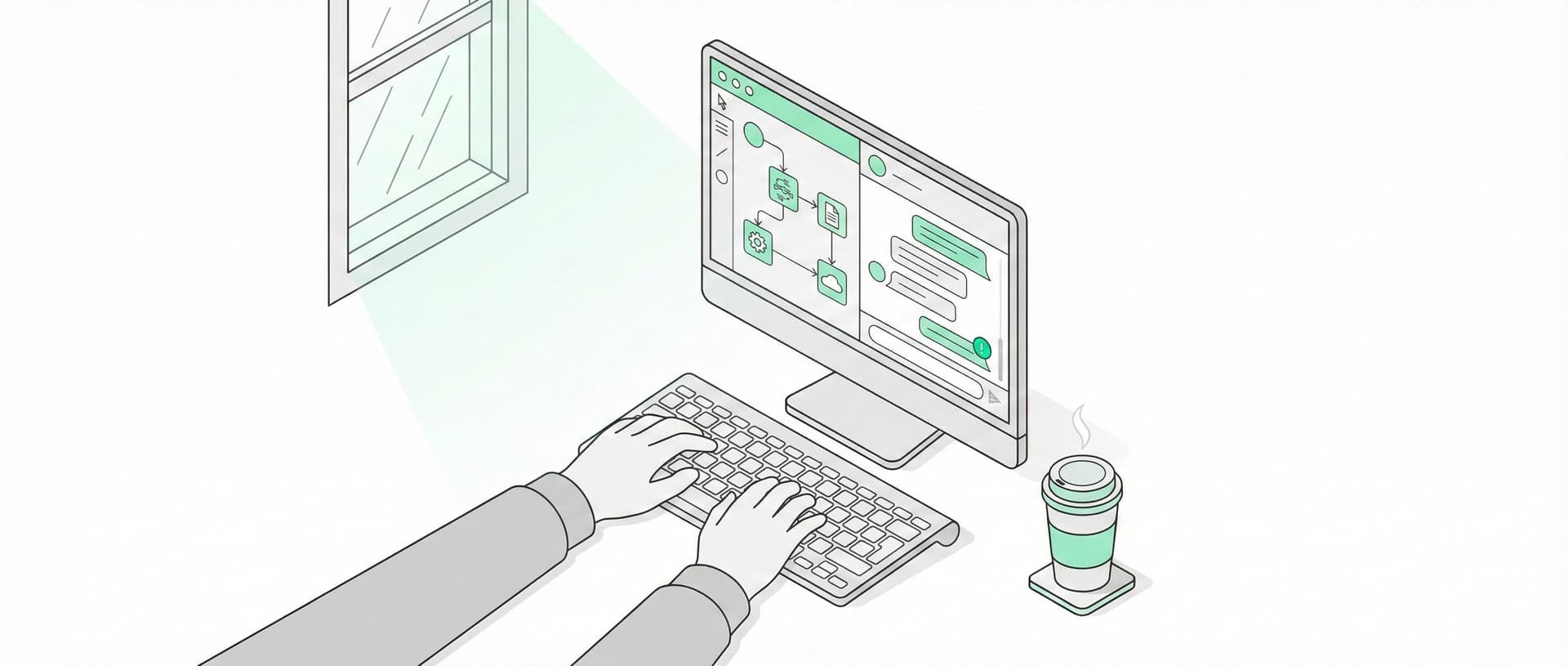
8:00 AM — Quick Wins Before Lunch
Tuesday morning is protected build time. No meetings, no distractions. This is when your automation specialist tackles quick wins — things that can be built and deployed in a couple of hours.
This Tuesday, they knock out three small automations:
First, a Slack notification that pings the account team whenever a tracked media mention comes in. Simple, but it means coverage doesn't sit in an inbox for hours before anyone notices.
Second, an automated weekly backup of all client folders to cloud storage. Peace of mind, set and forget.
Third, a smart timesheet reminder system. Instead of finance chasing everyone at month-end, the system sends gentle nudges on Friday afternoons — when people are wrapping up their week and their memory of what they worked on is still fresh. If timesheets aren't done by Monday noon, it nudges again. If still not done by Tuesday, it quietly alerts their manager.
Finance didn't ask for a miracle. They just wanted to stop being the bad guy chasing people down. Now they don't have to.
1:00 PM — The Bigger Builds
Afternoons shift to more complex projects. Right now, the major work-in-progress is a pitch deck generator.
The problem it solves: your team spends hours building pitch decks from scratch for every new opportunity. They're pulling in case studies, updating stats, customising messaging — all manually. And half the time they're starting from a template that's already outdated.
The solution being built: a system where an account manager fills in a short brief — client industry, their challenges, which services to highlight, which case studies are relevant — and gets a first-draft deck generated automatically. Properly branded, correctly structured, ready for refinement rather than construction.
It won't write the deck perfectly. But it'll get them 70% of the way there in ten minutes instead of three hours. The humans focus on the thinking and the polish, not the assembly.
Your automation specialist is two weeks into this build. Today's goal: get the case study section working properly, pulling the right examples based on industry and service tags.
Wednesday: Making Sure Things Actually Work
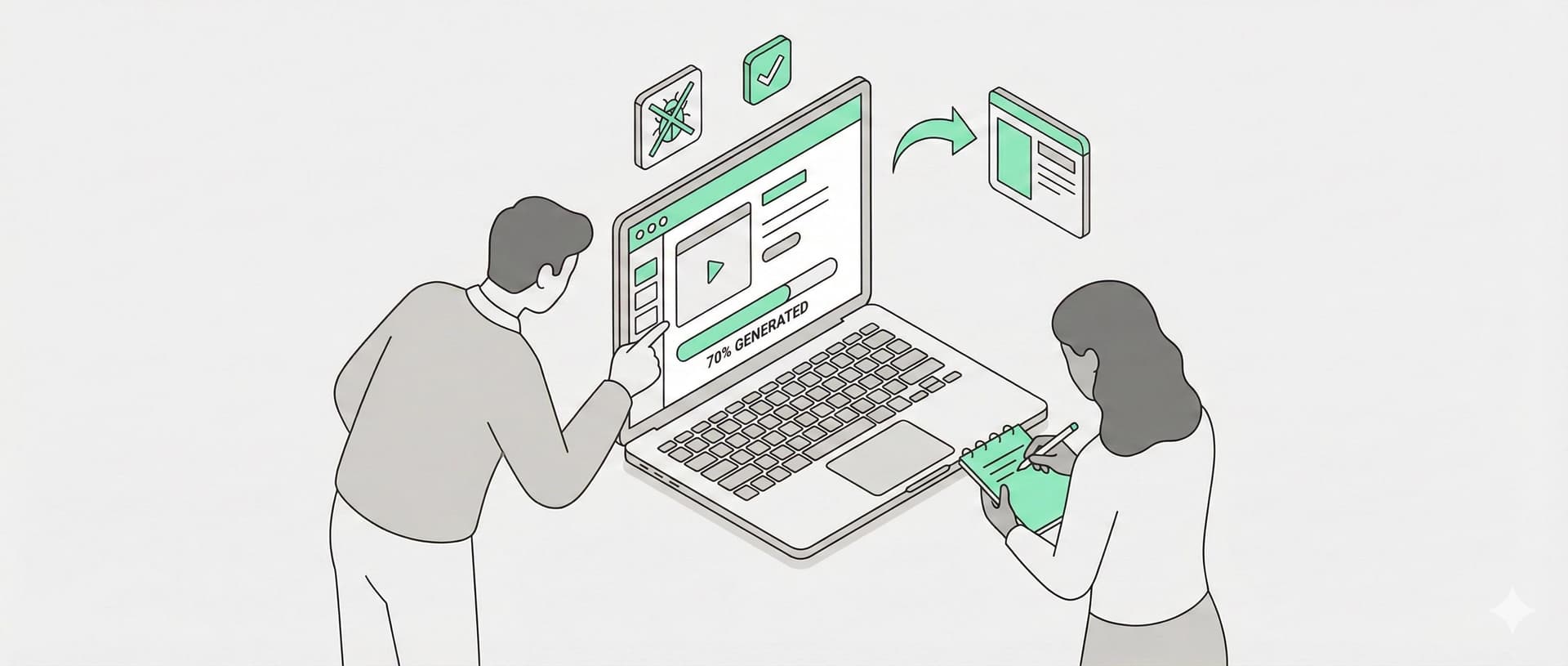
9:00 AM — Breaking Things on Purpose
Nothing damages trust faster than an automation that fails when it matters. Wednesday is testing day.
Your automation specialist runs through scenarios systematically on the pitch deck generator. What happens if someone doesn't select any case studies? What if they pick a service you don't have templated content for yet? What if two people try to generate decks simultaneously?
They find three bugs and one edge case that produces a weirdly formatted slide. All get fixed before anyone outside the room sees it.
11:00 AM — Real Users, Real Feedback
Once internal testing passes, beta testers get involved. Today, two account managers try the pitch deck generator for the first time.
The automation specialist watches over their shoulders. Not just for errors, but for confusion. One manager hesitates at the industry dropdown — the categories don't match how she thinks about clients. That's useful feedback. Easy to fix now, would have caused friction forever if ignored.
The other manager generates a deck and immediately asks: "Can it pull in their logo automatically?" Not in the current version, but it goes on the list for v2.
2:00 PM — Refinements and a Side Project
The afternoon is for fixes. The industry dropdown gets relabelled. A clearer confirmation message gets added. The button that says "Generate" becomes "Generate First Draft" — a small change that sets better expectations.
There's also time to check in on a quieter automation that's been running in the background: the client status document system.
Here's what it does. For each active client, the system automatically compiles a weekly status update — tasks completed, tasks in progress, upcoming deadlines, any blockers. It pulls from your project management tool, formats it cleanly, and either sends it directly to the client or stages it for an account manager to review first.
The result? Clients get proactive communication before they even think to ask "where are we at?" Your team looks organised, responsive, on top of things — because the system is handling the assembly, and they're just adding the human touch.
One client mentioned it in a call last week: "I love that you send these updates every Friday. It's so helpful." The account manager smiled and said thanks. Didn't mention the robot.
Thursday: Rolling It Out
10:00 AM — Demo Time
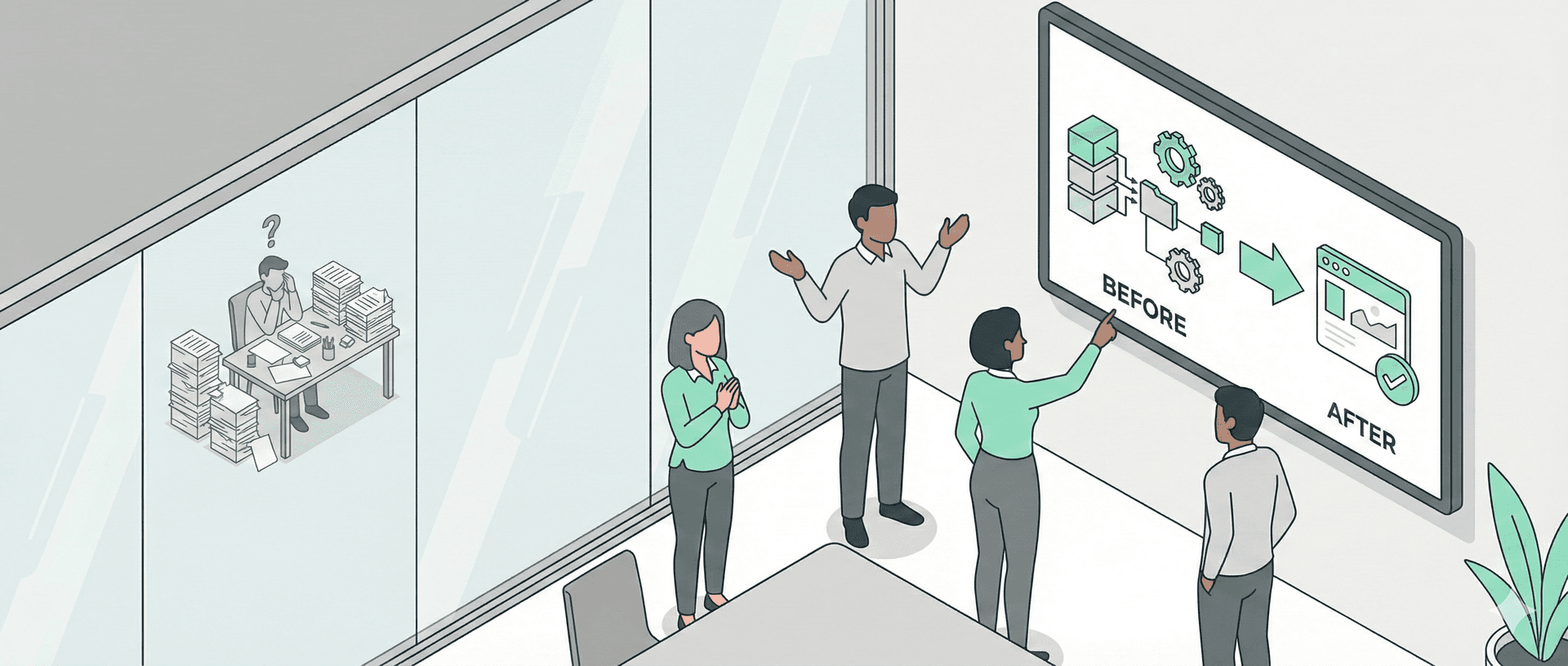
The pitch deck generator is ready for its proper debut. Your automation specialist runs a demo for the full account management team and anyone else involved in pitches.
They show the before: the laborious process of copying, pasting, reformatting, hunting for case studies.
Then the after: a two-minute brief form, a button press, and a deck that would have taken three hours appears in three minutes.
The room is attentive. A few sceptical questions, quickly answered. Then the question that matters: "When can we start using it?"
The answer: now. It's live.
1:00 PM — Hands-On Rollout
The afternoon is spent with individual team members, making sure they're comfortable with the new tool. Not formal training — just sitting with people as they use it for the first time on real pitches.
Your senior account manager — the sceptical one from Monday — generates a deck for a pitch she's got next week. It takes four minutes. She spends another twenty refining it. That's still less than a quarter of the time she would have spent building from scratch.
"Okay," she admits. "This is actually good."
3:00 PM — Documentation
Everything gets documented while it's fresh. How to use the generator, step by step. What to do if something goes wrong. Which fields are required, which are optional. Where to send feedback or requests.
The documentation lives where your team will actually find it — pinned in the relevant Slack channel, linked from your internal wiki. Accessible, not buried.
Friday: Wrapping Up and Looking Ahead

9:00 AM — Status Update
Friday morning is about visibility. Your automation specialist updates the project tracker and sends a summary of the week:
Shipped this week:
- Pitch deck generator (live, full rollout)
- Media mention Slack notifications
- Smart timesheet reminders
- Client folder auto-creation
Already running and working well:
- Automated client status documents (proactive weekly updates)
- Weekly backup automation
In progress:
- Competitor analysis automation (discovery complete, build starting next week)
- Brainstorming deck generator (for new business prep)
Coming up:
- Client onboarding workflow improvements
- AI-assisted first draft for press releases
You've got a clear picture of momentum. Things are moving.
And somewhere in the building, your finance manager is having a suspiciously calm Friday. Nobody's chasing timesheets. They're just... done. She's not entirely sure what to do with herself.
11:00 AM — Working With Creative on the Brainstorming Deck
Your creative director has a pitch next Wednesday. Normally, this weekend someone would be frantically pulling together a brainstorming deck — competitor creative, inspiration from other industries, mood references, trends.
But today, your automation specialist sits down with her to build something better.
They map out what a good brainstorming deck contains: competitor social feeds (pulled automatically), recent campaign work from adjacent industries (sourced via AI), trend reports summarised into key points, mood board starters based on the brief.
The goal isn't to replace creative thinking — it's to have all the raw material ready before the team walks into the room. Instead of spending the first hour of a brainstorm gathering references, they can spend it actually brainstorming.
By Wednesday morning, the deck will be waiting. Forty slides of stimulus, automatically assembled. The creative team's job is to react, build on it, push it further — not to hunt and gather.
2:00 PM — Exploration Time
Friday afternoon is protected for learning and experimentation. The automation landscape moves fast — what was impossible three months ago might be straightforward now.
This week, your automation specialist is exploring a new AI model that's particularly good at summarising long documents. Could be useful for processing client briefs, or generating first-draft meeting notes from transcripts. Not a project yet, just exploration.
Some explorations lead nowhere. But occasionally one becomes next month's breakthrough.
The Moments That Matter
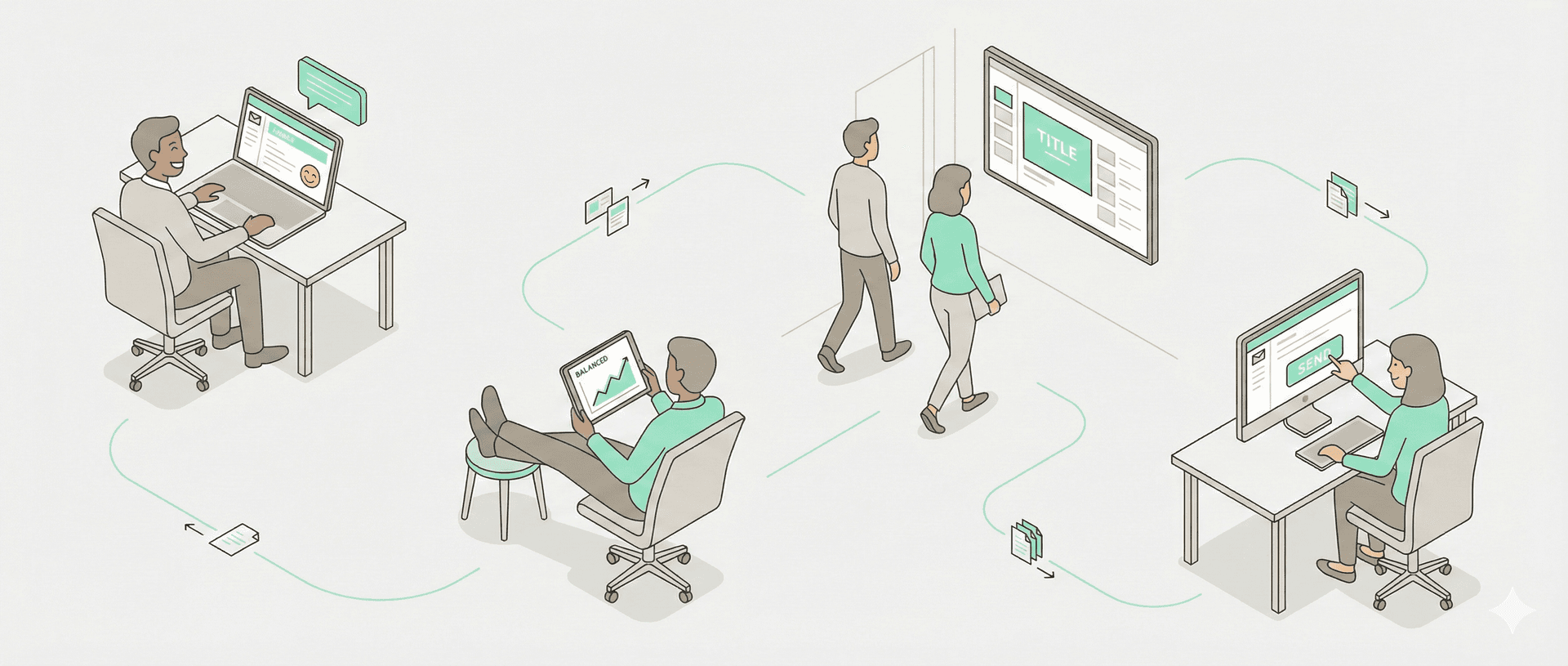
It's not just about the big rollouts. It's the small shifts that accumulate:
The client who mentions how organised you seem, because they get status updates before they ask.
The account manager who used to dread pitch prep, now confident because the deck is 70% done before she starts.
The creative team walking into a brainstorm with forty slides of inspiration ready and waiting.
The finance manager who's stopped being the timesheet police.
The PR coordinator who spots coverage in Slack instead of discovering it three days later in an email thread.
None of these are revolutionary on their own. But together, they change how your agency feels to work at — and how it feels to be a client of.
The Cumulative Effect
After a few months with an automation specialist embedded in your agency, here's what typically shifts:
Time comes back. Your account managers aren't spending Friday afternoons on competitive reports — they're reviewing AI-generated drafts and adding the strategic thinking. Your team isn't building pitch decks from scratch — they're refining smart first drafts. Hours reclaimed, every week.
Things happen proactively. Clients get updates before they ask. Brainstorm materials are ready before the meeting. Timesheets are done before finance has to chase. The agency runs ahead of the clock instead of behind it.
Fewer mistakes. Humans make errors when they're doing repetitive tasks. The automation doesn't forget to check a competitor's Instagram. It doesn't accidentally send an outdated case study. Consistency improves.
Visibility increases. When processes are automated, they're also tracked. You can see how many pitches went out this month, how long they took, what the win rate looks like. Data you never had before.
Morale lifts. Your people didn't get into agency life to copy data between spreadsheets or chase colleagues for admin. They joined to do creative, strategic, meaningful work. Removing the tedious stuff matters more than most owners realise.
Capacity grows without headcount. You can take on more work without proportionally adding staff. That's a direct margin improvement.
What This Role Actually Requires
If you're considering bringing automation expertise into your agency — whether embedded or as an external partner — here's what separates effective practitioners from the rest.
They listen before they build. The pitch deck generator started with a conversation, not an assumption. Understanding your team's real workflow matters more than technical cleverness.
They ship incrementally. Quick wins early, larger projects building over time. Your team sees progress weekly, not quarterly.
They communicate in your language. Hours saved, pitches accelerated, clients impressed. Not technical jargon about APIs and webhooks.
They document everything. You're not dependent on one person's knowledge. The systems they build outlast their involvement.
They think about how work feels, not just how it flows. The finance manager's relief matters. The creative director's confidence matters. Automation isn't just about efficiency — it's about making work better.
The Bottom Line
Automation isn't about replacing your team. It's about removing the work that drains them so they can focus on the work that matters — the creative thinking, the client relationships, the strategic insights that win business.
An embedded automation specialist acts as the bridge between what technology can do and what your people actually need. They find the friction, build the solutions, and keep improving week after week.
The result isn't just efficiency. It's an agency that feels different to work at. One where things are ready before you need them, clients are impressed before they ask, and your team spends their energy on the work they actually signed up to do.
That's what it looks like in practice. One week at a time.
This article is part of a series on practical AI and automation for marketing, PR, and media agencies. If you're exploring how automation could work in your agency, [get in touch] to discuss your specific situation.